

الغُنَّة: هي صوت يخرج من الخيشوم ، والخيشوم: هو التجويف الذي يصل ما بين فتحة الأنف وأعلى الحلق.
The ghunnah sound is exclusively associated with the letters nūn (ن) and mīm (م), as illustrated in the images below.
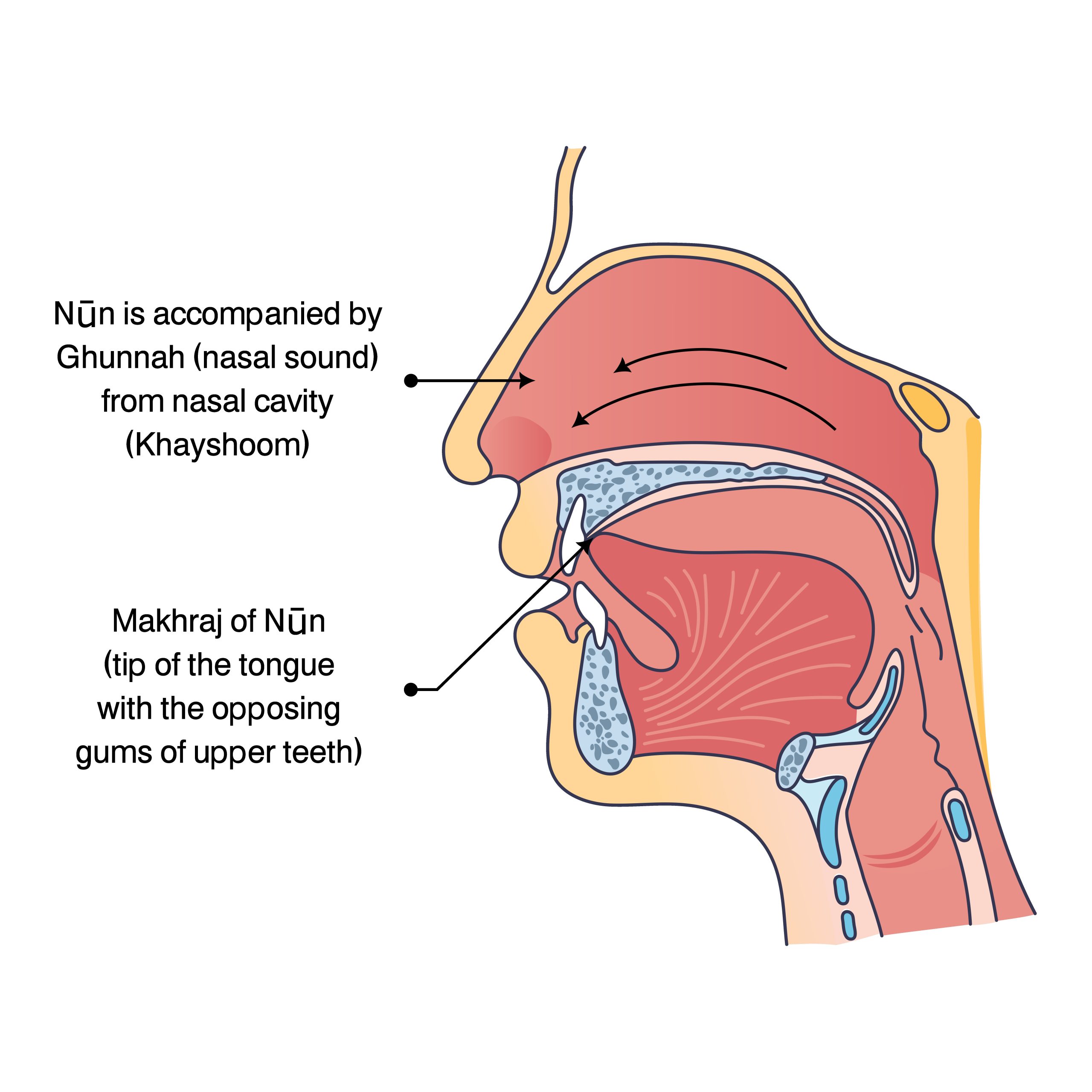
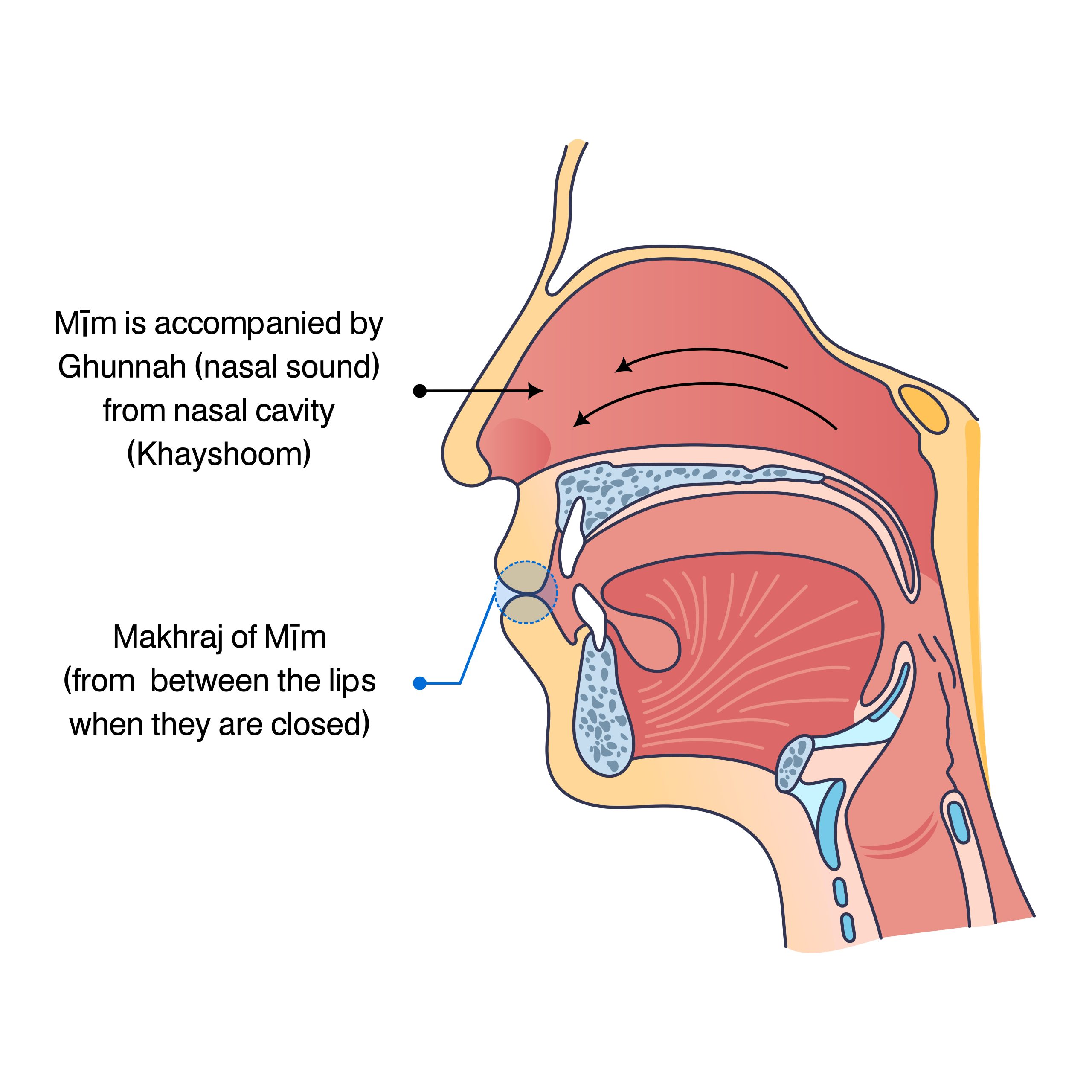
The reciter must prolong the duration of ghunnah in doubled Nūn or Mīm wherever they occur, and this should be for two counts. This rule is known as “the doubled ghunnah letter,” because ghunnah is an intrinsic characteristic of both Nūn and Mīm. ¹
The ghunnah appears in doubled Nūn and Mīm whether they occur at the beginning of the word such as: (من مال) ((ومن نعمره) in the middle of a word, such as: ﴿ٱلنَّاسِ﴾, ﴿أُمَّةٞ﴾, or at the end of a word, such as: ﴿ٱلۡجَآنَّ﴾, ﴿ٱلۡيَمِّ﴾.²
When we observe the appearance of shaddah (ّ) on nūn or mīm at the beginning of words, such as in the word (مال) from the verse: ﴿مِّن مَّالِ ٱللَّهِ﴾. When starting with such a word, we pronounce the mīm without doubling and without additional ghunnah, because the doubling (shaddah) at the beginning of words is the result of Idghām (merging). The rules of idghām will be explained in future lessons, InshAllah. ³
وليتنبه القارئ – أيضًا – إلى أنه يجب الحفاظ على كمال زمن الغُنَّةِ بمقدار حركتين عند الوقوف على حرف الغنة المشدد الذي يأتي في أواخر الكلمات، فإذا أراد الوقوف على كلمة: ﴿ٱلۡيَمِّ﴾ مثلًا، فإنه يقف عليها بالغنة بمقدار حركتين.
الرعاية (240)، نهاية القول المفيد (55-56)، هداية القاري (1/177).
الرعاية (240)، نهاية القول المفيد (55-56)، هداية القاري (1/177)، المنير (66).
هداية القاري (1/180)، المنير (159).
هداية القاري (1/179)، المنير (159).
المنير (159).