

1. الحروف العربية
-
Introductions
Introduction to the Science of Tajwīd1 اختبار -
The Ruling on Learning Tajwīd1 اختبار
-
Etiquettes Related to the Qur’an and Its Recitation1 اختبار
-
Levels of Recitation1 اختبار
-
Seeking Refuge (Istiʿādhah) and the Basmalah1 اختبار
-
Arabic Letters – Articulation and CharacteristicsArticulation Points of Arabic Letters1 اختبار
-
The Jawf (oral and throat cavity):1 اختبار
-
Alif Maddiyyah1 اختبار
-
Wāw Maddiyyah1 اختبار
-
Yāʾ Maddiyyah1 اختبار
-
The Throat (Ḥalq)1 اختبار
-
Hamzah1 اختبار
-
Hāʾ1 اختبار
-
ʿAyn1 اختبار
-
Ḥāʾ1 اختبار
-
Ghayn1 اختبار
-
Khāʾ1 اختبار
-
The Tongue (Lisān)1 اختبار
-
Qāf1 اختبار
-
Kāf1 اختبار
-
Jīm1 اختبار
-
Shīn1 اختبار
-
Yāʾ (non-maddiyyah)1 اختبار
-
Ḍād1 اختبار
-
Lām1 اختبار
-
Nūn1 اختبار
-
Rāʾ1 اختبار
-
Ṭāʾ1 اختبار
-
Dāl1 اختبار
-
Tāʾ1 اختبار
-
Ṣād1 اختبار
-
Sīn1 اختبار
-
Zāy1 اختبار
-
Ẓāʾ1 اختبار
-
Dhāl1 اختبار
-
Thāʾ1 اختبار
-
The Lips and Nasal Cavity1 اختبار
-
Fāʾ1 اختبار
-
Wāw (non-maddiyyah)1 اختبار
-
Bāʾ1 اختبار
-
Mīm1 اختبار
Video of the Letter Ṣād:
This short video presents the articulation and characteristics of the letter Ṣād, demonstrating its correct pronunciation with Qur’anic examples, and highlighting the most common pronunciation errors made by readers.
First: The Articulation Point of Ṣād:
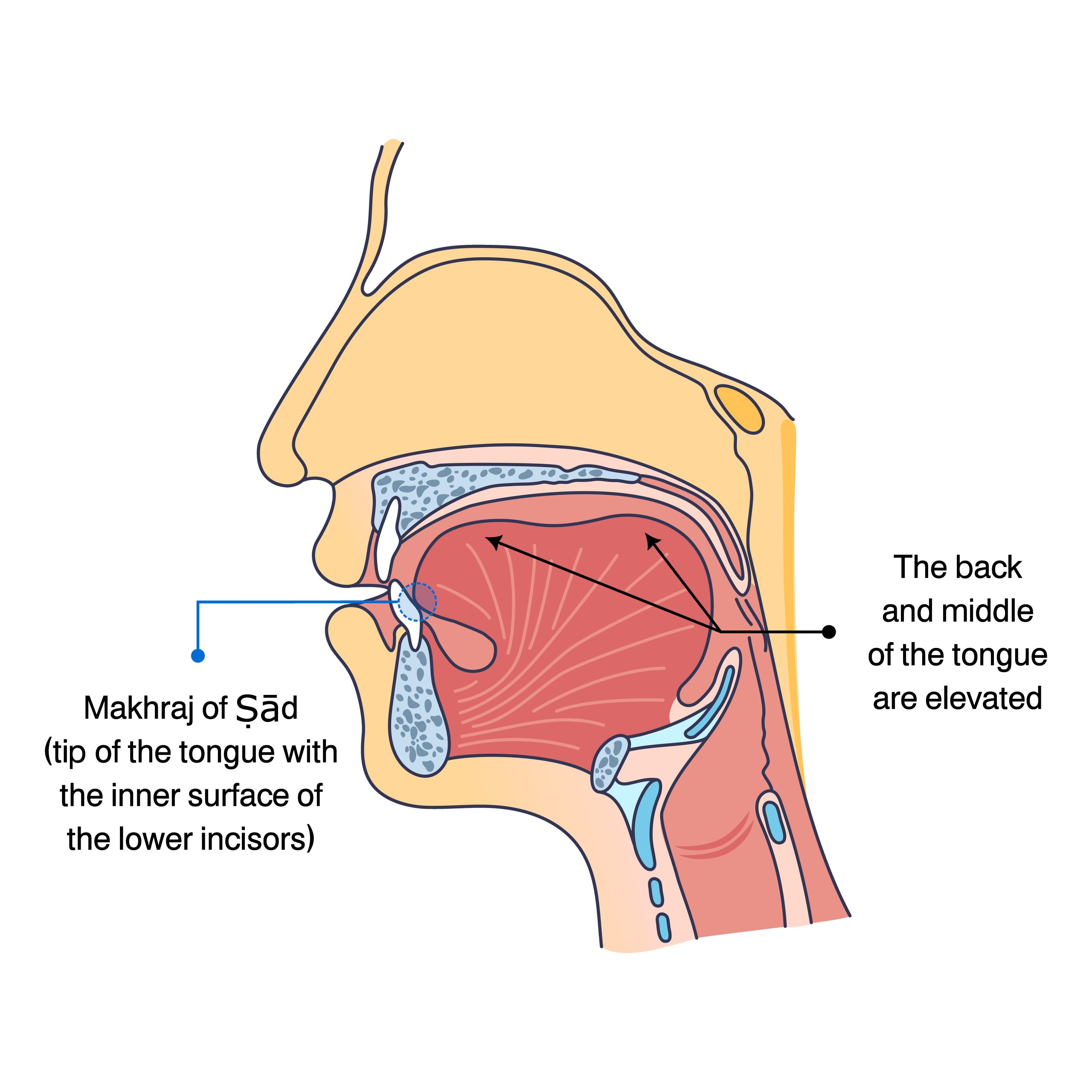
The letter Ṣād is pronounced from the tip of the tongue with the inner surface of the lower incisors. The sound travels from above the tongue, flowing between the upper and lower teeth. It shares its articulation point with the letters Sīn and Zāy, as shown in the image.
Second: The Main Characteristics of the Letter Ṣād:
Rakhāwah (Flexibility), Hams (Whispering), Ṣafīr (Whistling), Istiʿlā’ (Elevation), and Iṭbāq (closure).
The image of Ṣād articulation shows an open Makhraj, allowing the sound of the letter to flow and not be cut off immediately, which defines 'Rkhāwah'(Flexibility)
Ṣād is whispered (Mahmoos), meaning that extra breath flows with its sound.
It is characterized by Safīr—a sharp whistling sound caused by the air passing between the teeth.
Ṣād is an elevated letter, meaning the back of the tongue rises during articulation, resulting in a heavy sound(Mufakham)
The middle and back of the tongue are also elevated during its pronunciation, adhering the tongue to the palate—a trait known as ' Istiṭālah '—which further intensifies its heaviness(Tafkheem).
Third: Pronouncing Ṣād in Different States through Qur’anic Examples:
You can click on the word to hear the correct pronunciation.
| First: Ṣād in the state of non-vowelled (Sukūn): | ||
|---|---|---|
| أَصْ | أُصْ | إِصْ |
| ﴿أَصۡحَٰبُ﴾ | ﴿سَأُصۡلِيهِ﴾ | ﴿ٱصۡبِرُواْ﴾ |
| Second: Ṣād with short vowels (Harakat): | ||
|---|---|---|
| صَ | صُ | صِ |
| ﴿صَبَّحَهُم﴾ | ﴿صُدُودٗا﴾ | ﴿صِبۡغَةَ﴾ |
| Third: Ṣād with long vowels (Madd letters): | ||
|---|---|---|
| صا | صو | صي |
| ﴿صَٰحِبَةٞ﴾ | ﴿صُورَةٖ﴾ | ﴿بَصِيرَةٍ﴾ |
| Fourth: Ṣād with shaddah(when it is doubled) | ||
|---|---|---|
| أَصَّ | أصُّ | أصِّ |
| ﴿ٱلصَّلَوٰةَ﴾ | ﴿ٱلصُّدُورِ﴾ | ﴿ٱلصِّيَامُ﴾ |
Fourth: Common Mistakes in Pronouncing Ṣād:
- 1.Weakening its whistling sound (Ṣafīr), as in: ﴿ٱلصَّٰلِحِينَ﴾. The correct way is to maintain its sharp whistling sound: ﴿ٱلصَّٰلِحِينَ﴾. Allah Almighty says: ﴿وَيُكَلِّمُ ٱلنَّاسَ فِي ٱلۡمَهۡدِ وَكَهۡلٗا وَمِنَ ٱلصَّٰلِحِينَ﴾.
- 2.Using the lips when pronouncing it by rounding them forward, such as: ﴿ٱلصَّٰبِرِينَ﴾. The correct way is to keep the lips relaxed (no rounding): ﴿ٱلصَّٰبِرِينَ﴾. Allah Almighty says: ﴿إِنَّ ٱللَّهَ مَعَ ٱلصَّٰبِرِينَ﴾.
- 3.Pronouncing it lightly (Muraqqaq) so that it resembles the letter Sīn, such as in: ﴿ٱلۡمَصِيرُ﴾. The correct way is to pronounce it heavily (Mufakham): ﴿ٱلۡمَصِيرُ﴾. Allah Almighty says: ﴿غُفۡرَانَكَ رَبَّنَا وَإِلَيۡكَ ٱلۡمَصِيرُ﴾.
الرعاية (215)، التحديد (105)، نهاية القول المفيد (54)، هداية القاري (1/68)، التجويد المصور (57)، المنير (63).
الرعاية (215)، نهاية القول المفيد (113)، هداية القاري (1/97)، التجويد المصور (97)، المنير (95).