

1. الحروف العربية
-
Introductions
Introduction to the Science of Tajwīd1 اختبار -
The Ruling on Learning Tajwīd1 اختبار
-
Etiquettes Related to the Qur’an and Its Recitation1 اختبار
-
Levels of Recitation1 اختبار
-
Seeking Refuge (Istiʿādhah) and the Basmalah1 اختبار
-
Arabic Letters – Articulation and CharacteristicsArticulation Points of Arabic Letters1 اختبار
-
The Jawf (oral and throat cavity):1 اختبار
-
Alif Maddiyyah1 اختبار
-
Wāw Maddiyyah1 اختبار
-
Yāʾ Maddiyyah1 اختبار
-
The Throat (Ḥalq)1 اختبار
-
Hamzah1 اختبار
-
Hāʾ1 اختبار
-
ʿAyn1 اختبار
-
Ḥāʾ1 اختبار
-
Ghayn1 اختبار
-
Khāʾ1 اختبار
-
The Tongue (Lisān)1 اختبار
-
Qāf1 اختبار
-
Kāf1 اختبار
-
Jīm1 اختبار
-
Shīn1 اختبار
-
Yāʾ (non-maddiyyah)1 اختبار
-
Ḍād1 اختبار
-
Lām1 اختبار
-
Nūn1 اختبار
-
Rāʾ1 اختبار
-
Ṭāʾ1 اختبار
-
Dāl1 اختبار
-
Tāʾ1 اختبار
-
Ṣād1 اختبار
-
Sīn1 اختبار
-
Zāy1 اختبار
-
Ẓāʾ1 اختبار
-
Dhāl1 اختبار
-
Thāʾ1 اختبار
-
The Lips and Nasal Cavity1 اختبار
-
Fāʾ1 اختبار
-
Wāw (non-maddiyyah)1 اختبار
-
Bāʾ1 اختبار
-
Mīm1 اختبار
Video of the Letter Wāw Maddiyyah
This short video presents the articulation and characteristics of the letter Wāw Maddiyyah, showing how it is pronounced practically, with Qur’anic examples, and highlighting the most common pronunciation mistakes.
To enable the translation option, please click on 
First: Articulation Point of the Letter Wāw Maddiyyah:
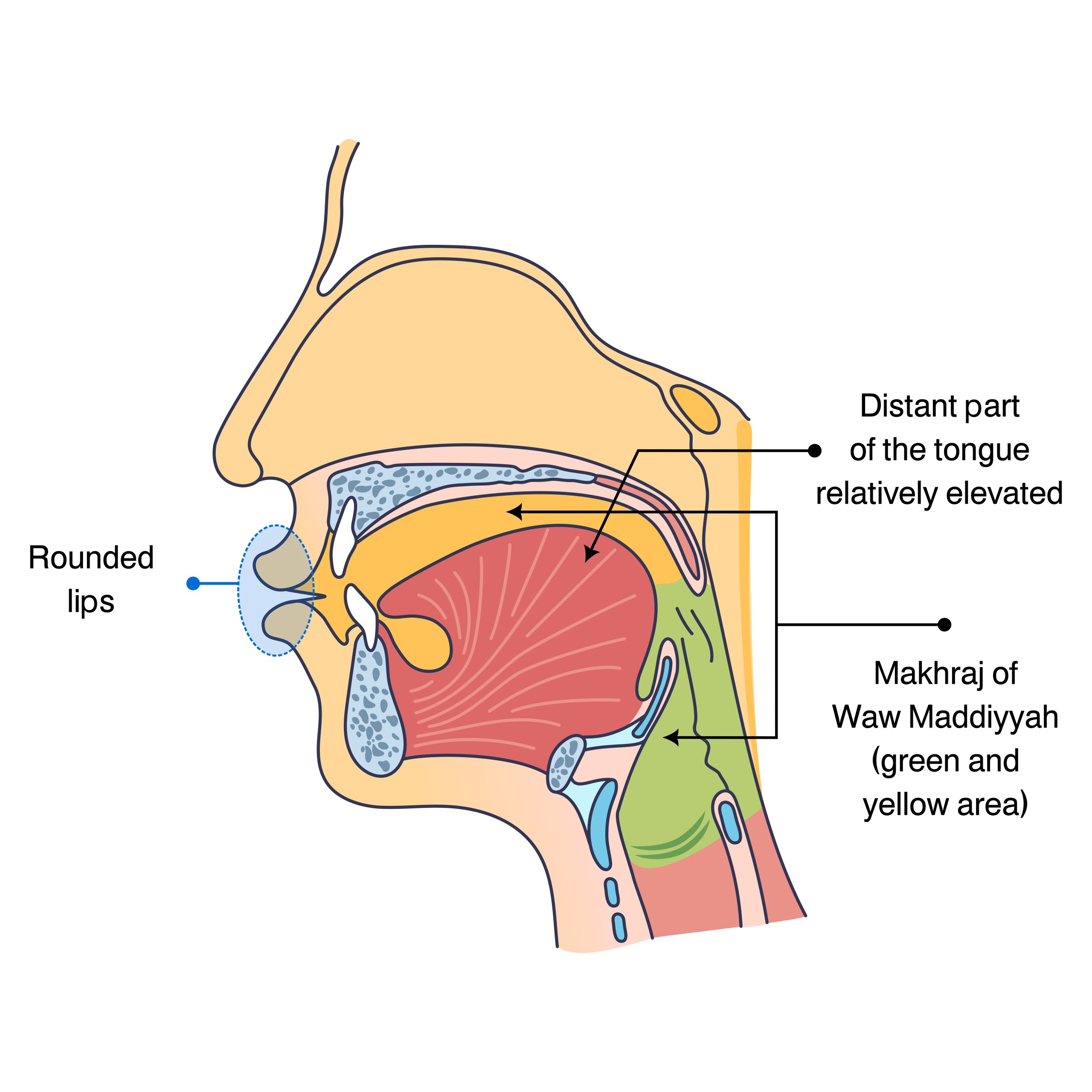
الواو المدية: هي الواو الساكنة المضموم ما قبلها وتخرج من الجوف باهتزاز الأوتار الصوتية في الحَنجَرة، ويصاحب ذلك انضمامٌ للشفتين، وارتفاعٌ نسبي لأقصى اللسان ، كما يظهر في الصورة.
ثانيًا: أهمُّ صفات حرف الواو المدية:
Its primary feature is istifāl (non-elevation of the back of the tongue).
From the image of the articulation point of Wāw Maddiyyah, it can be seen that the back of the tongue is relatively raised and the throat is open. However, this slight elevation does not affect the "istifāl" quality, so the letter is pronounced as light (Muraqaq).
Third: Pronunciation of Wāw Maddiyyah through Qur’anic Examples:
You can click on the word to hear the correct pronunciation.
| أُو | بُو | دُو | صُو | طُو | قو |
|---|---|---|---|---|---|
| ﴿أُوتِيتُمۡ﴾ | ﴿بُورٗا﴾ | ﴿دُونِهِمۡ﴾ | ﴿صُورَةٖ﴾ | ﴿طُوبَىٰ﴾ | ﴿قُولُوٓاْ﴾ |
Fourth: Common Mistakes in Pronouncing Wāw Maddiyyah:
- • Not rounding the lips sufficiently:❌ Example: ﴿تَعۡمَلُونَ﴾✅ Correct: ﴿تَعۡمَلُونَ﴾Allah says: ﴿أُورِثۡتُمُوهَا بِمَا كُنتُمۡ تَعۡمَلُونَ﴾.
- • Making it heavy, especially near heavy letters:❌ Example: ﴿ٱلۡكَٰفِرُونَ﴾✅ Correct: ﴿ٱلۡكَٰفِرُونَ﴾▶ Allah says: ﴿قُلۡ يَٰٓأَيُّهَا ٱلۡكَٰفِرُونَ﴾.
- • Mixing its sound with ghunnah (nasal sound) which is called nasalization in which part of the sound is pronounced through the nose especially if it is neighboring a Nun or Meem:❌ Example: ﴿تُوقِنُونَ﴾✅ Correct: ﴿تُوقِنُونَ﴾▶ Allah says: ﴿لَعَلَّكُم بِلِقَآءِ رَبِّكُمۡ تُوقِنُونَ﴾.
- • Exaggerated lip pressure causing noise:❌ Example: ﴿يَقُولُونَ﴾✅ Correct: ﴿يَقُولُونَ﴾▶ Allah says: ﴿وَإِن كَانُواْ لَيَقُولُونَ﴾.
- • Exaggerating waviness in its sound especially when prolonged(Madd):❌ Example: ﴿تَعۡمَلُونَ﴾✅ Correct: ﴿تَعۡمَلُونَ﴾▶ Allah says: ﴿وَمَا ٱللَّهُ بِغَٰفِلٍ عَمَّا تَعۡمَلُونَ﴾.
[3] Nihayat Al-Qawl Al-Mufid (49), Hidayat Al-Qari (1/65), Illustrated Tajweed (47).