

1. الحروف العربية
-
Introductions
Introduction to the Science of Tajwīd1 اختبار -
The Ruling on Learning Tajwīd1 اختبار
-
Etiquettes Related to the Qur’an and Its Recitation1 اختبار
-
Levels of Recitation1 اختبار
-
Seeking Refuge (Istiʿādhah) and the Basmalah1 اختبار
-
Arabic Letters – Articulation and CharacteristicsArticulation Points of Arabic Letters1 اختبار
-
The Jawf (oral and throat cavity):1 اختبار
-
Alif Maddiyyah1 اختبار
-
Wāw Maddiyyah1 اختبار
-
Yāʾ Maddiyyah1 اختبار
-
The Throat (Ḥalq)1 اختبار
-
Hamzah1 اختبار
-
Hāʾ1 اختبار
-
ʿAyn1 اختبار
-
Ḥāʾ1 اختبار
-
Ghayn1 اختبار
-
Khāʾ1 اختبار
-
The Tongue (Lisān)1 اختبار
-
Qāf1 اختبار
-
Kāf1 اختبار
-
Jīm1 اختبار
-
Shīn1 اختبار
-
Yāʾ (non-maddiyyah)1 اختبار
-
Ḍād1 اختبار
-
Lām1 اختبار
-
Nūn1 اختبار
-
Rāʾ1 اختبار
-
Ṭāʾ1 اختبار
-
Dāl1 اختبار
-
Tāʾ1 اختبار
-
Ṣād1 اختبار
-
Sīn1 اختبار
-
Zāy1 اختبار
-
Ẓāʾ1 اختبار
-
Dhāl1 اختبار
-
Thāʾ1 اختبار
-
The Lips and Nasal Cavity1 اختبار
-
Fāʾ1 اختبار
-
Wāw (non-maddiyyah)1 اختبار
-
Bāʾ1 اختبار
-
Mīm1 اختبار
Video of the Letter Ghayn:
This short video presents the articulation and characteristics of the letter Ghayn, showing how to pronounce it practicall y with Qur’anic examples, and highlighting the most common mistakes readers make when articulating it.
To enable the translation option, please click on 
First: Articulation Point of the Letter Ghayn:
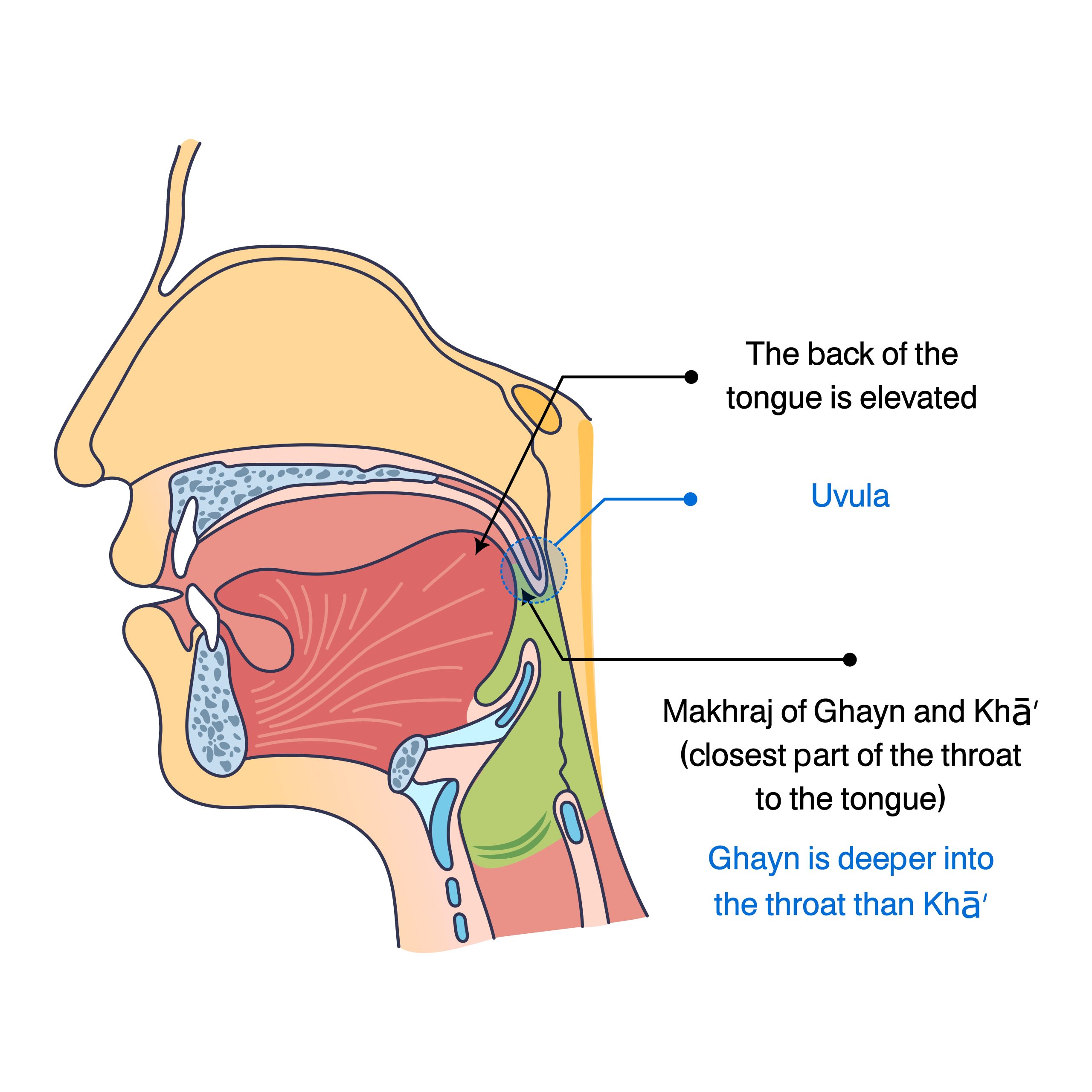
تخرج Ghayn من أدنى الحلق، وهي منطقة جذر اللسان، مع ما يحاذيه من أقصى الحنك العلوي عند اللهاة، ويشاركها في المخرج حرف الخاء، وGhayn أعمق قليلاً من الخاء ، كما يظهر في الصورة.
Second: Main Characteristics of the Letter Ghayn:
• Rakhawah (Flexibility) • Istiʿlāʼ (elevation of the back of the tongue)
The diagram of the articulation of Ghayn shows that the articulation point is open, allowing the sound to flow and not cut off abruptly. This is described as Rakhawah.
Ghayn is one of the letters of Istiʿlāʼ, meaning that the back of the tongue is raised, causing the letter to be pronounced heavily (Mufakham).
Third: Pronunciation of Ghayn in Different States with Qur’anic Examples:
You can click on the word to hear the correct pronunciation.
| Ghayn in the non-vowelled(Sukūn) State: | ||
|---|---|---|
| أَغْ | أُغْ | إِغْ |
| ﴿أَغۡلَٰلٗا﴾ | ﴿أُغۡشِيَتۡ﴾ | ﴿ٱغۡتَرَفَ﴾ |
| Ghayn with Short Vowels(Harakat): | ||
|---|---|---|
| غَ | غُ | غِ |
| ﴿غَلِيظٖ﴾ | ﴿غُثَآءٗ﴾ | ﴿غِشَٰوَةٞ﴾ |
| Ghayn with Long Vowels (Madd letter): | ||
|---|---|---|
| غا | غو | غي |
| ﴿غَالِبَ﴾ | ﴿لُغُوبٞ﴾ | ﴿وَغِيضَ﴾ |
Fourth: Common Mistakes in Pronouncing Ghayn:
- أولاً: عدم ظهورها أو إدغامُها بالقاف إذا جاءت بعدها، هكذا: ﴿تُزِغۡ قُلُوبَنَا﴾، والصواب إظهار Ghayn وفصلها عن القاف، هكذا: ﴿تُزِغۡ قُلُوبَنَا﴾، قال الله تعالى: ﴿رَبَّنَا لَا تُزِغۡ قُلُوبَنَا﴾.
- ثانيًا: ترقيقها، نحوُ: ﴿غَيۡرِ ٱلۡمَغۡضُوبِ عَلَيۡهِمۡ﴾، والصواب تفخيمهما، هكذا: ﴿غَيۡرِ ٱلۡمَغۡضُوبِ عَلَيۡهِمۡ﴾، قال الله تعالى: ﴿صِرَٰطَ ٱلَّذِينَ أَنۡعَمۡتَ عَلَيۡهِمۡ غَيۡرِ ٱلۡمَغۡضُوبِ عَلَيۡهِمۡ﴾.
- • Overemphasizing tafkhīm (heaviness)when it has a Kasrah, such as: ﴿مَا نَبۡغِي﴾. Correct: ﴿مَا نَبۡغِي﴾. Allah says: ﴿قَالُواْ يَٰٓأَبَانَا مَا نَبۡغِي﴾.
- • Applying Qalqalah(bounce) when it is in a non-vowelled (sukoon)state, like: ﴿وَأَغۡرَقۡنَا﴾. Correct: ﴿وَأَغۡرَقۡنَا﴾. Allah says: ﴿وَأَغۡرَقۡنَآ ءَالَ فِرۡعَوۡنَ﴾.
- • Pronouncing it like Khā’ or close to it, such as: ﴿يَغۡشَى﴾. Correct: ﴿يَغۡشَى﴾. Allah says: ﴿وَٱلَّيۡلِ إِذَا يَغۡشَىٰ﴾.
- • Pronouncing it like Qāf or close to it, such as: ﴿يَغۡفِرُ﴾. Correct: ﴿يَغۡفِرُ﴾. Allah says: ﴿يَغۡفِرُ لِمَن يَشَآءُ﴾.
التحديد (104)، نهاية القول المفيد (50-51)، هداية القاري (1/65)، التجويد المصور (49)، المنير (54).
الرعاية (169)، نهاية القول المفيد (94)، هداية القاري (1/95)، التجويد المصور (98)، المنير (95).